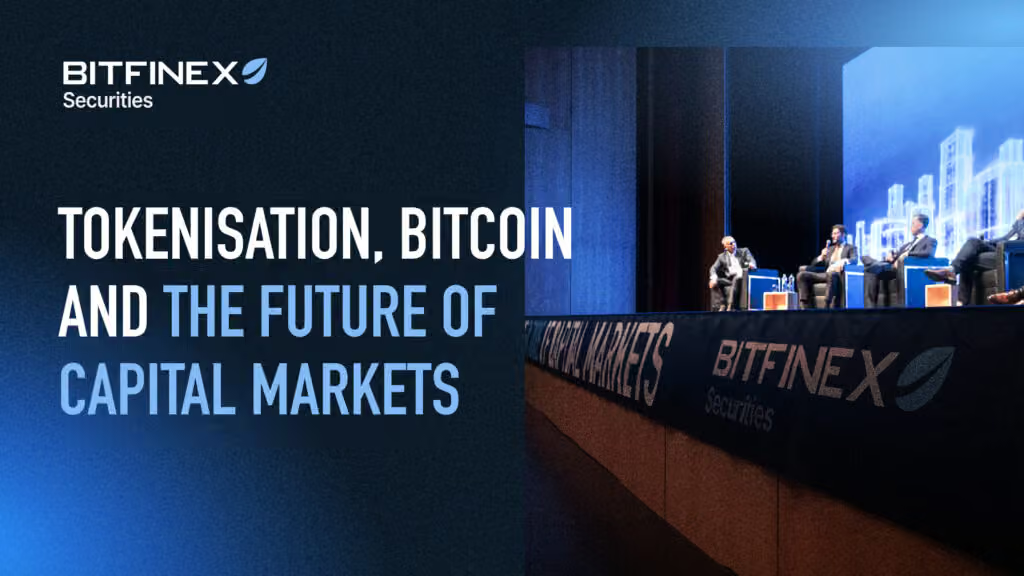
From yield-bearing collateral to bitcoin-backed credit, the inaugural edition of The Future of Capital Markets explored how bitcoin and tokenised assets are evolving into the foundations of a more efficient, accessible and interconnected global financial system.
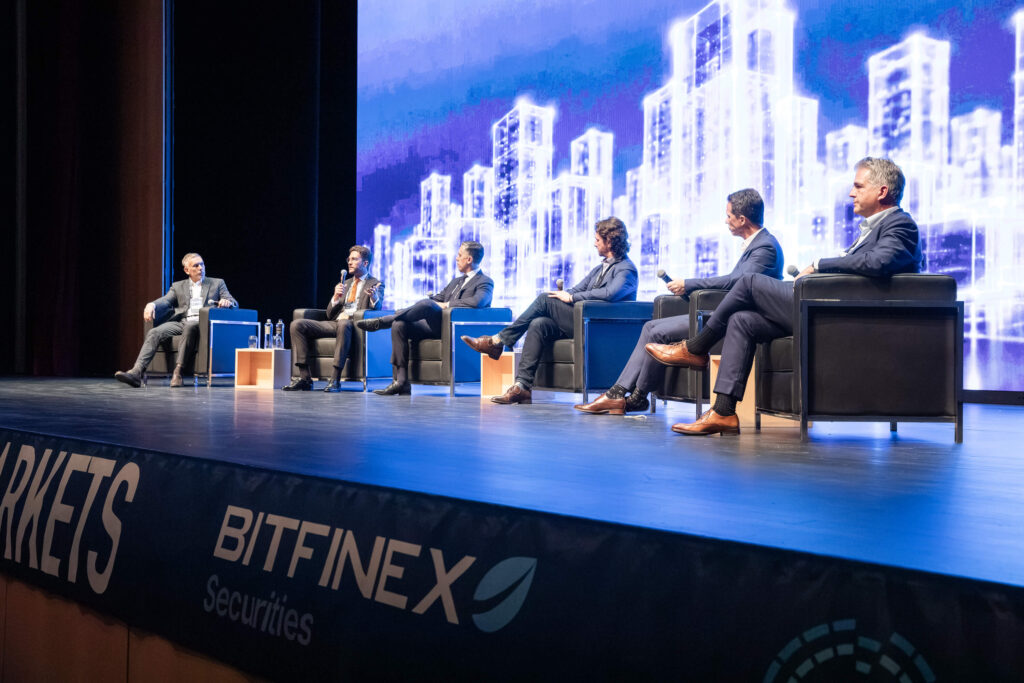
Bitfinex Securities Head of Operations, Jesse Knutson moderates the discussion on bitcoin treasury companies.
The tokenised asset market has grown into a multibillion-dollar industry over the past decade, attracting some of the world’s largest financial institutions. Yet compared with the scale of global capital markets, it still barely registers.
Speaking at the inaugural edition of The Future of Capital Markets in Lugano, Switzerland, on 22 October, Adam Lawrence, co-founder and CEO of RWA.xyz, estimated the current value of tokenised assets on-chain at between $30 billion and $40 billion. In the context of global finance, he observed, that figure “effectively rounds to zero”.
The observation captured both the scale of the opportunity and a central theme running through the day: the next phase of tokenised capital markets will be determined less by the number of assets tokenised than by the economic value they can deliver.
Co-hosted by Bitfinex Securities and Blockstream Capital Partners, the event brought together asset managers, bitcoin treasury companies, financial institutions, regulators and infrastructure providers from around the world.
Across ten panels, the conversation moved from the practical uses of tokenisation to the growing range of investment and financing structures being built around bitcoin as it becomes increasingly embedded in global finance.
Tokenisation has to do more than represent an asset
RWA.xyz’s data shows where tokenised capital is currently concentrated. US Treasuries lead the market, followed by private credit, while equities have only recently emerged as a significant category.
Lawrence distinguished between assets distributed on-chain and those merely represented there. Regulated securities may still depend on an issuer, offering documents or an official investor register. The practical question is what investors can do with the token.
Jesse Knutson, Head of Operations at Bitfinex Securities, emphasised self-custody as an important part of that test. “I think you should be able to withdraw it,” he said. “You should be able to self-custody it. And if you can’t do those things, is it tokenisation?”
Greater control does not mean unrestricted transfer. Will Turner of Winston Taylor highlighted how whitelisting can allow investors to hold regulated securities in their own wallets while limiting transfers to verified participants.
Technology cannot, however, create demand for an unattractive underlying investment. As Archax CEO and co-founder Graham Rodford put it: “Tokenising something doesn’t make it a good product.” Nor does continuous trading guarantee liquidity.
Martin Baumann, co-founder and managing partner of CMCC Global, identified access, distribution and liquidity as tokenisation’s principal benefits. He pointed to the CREST and Liberty Bitcoin Accumulation (LBAF) funds as examples of a new distribution channel offering eligible investors smaller commitments and access to secondary trading.
The regulatory discussion considered the environments in El Salvador and the Astana International Financial Centre (AIFC), where Bitfinex Securities operates. Giles Dixon, Head of Global Regulatory Affairs at Bitfinex and Tether, argued that effective rules should focus on risks and outcomes, while giving issuers a route beyond experiments and sandboxes.
The strongest case for tokenisation therefore lies not in putting an existing product on a blockchain for its own sake, but in improving how worthwhile investments are issued, distributed, held and transferred.
Yield-bearing collateral is the use case
One of the clearest use case examples of tokenisation is yield-bearing collateral.
Trading firms routinely post assets as margin against derivatives positions, often using stablecoins that generate no return for the trader. Tokenised money-market funds offer an alternative: collateral that can continue earning income while supporting trading activity.
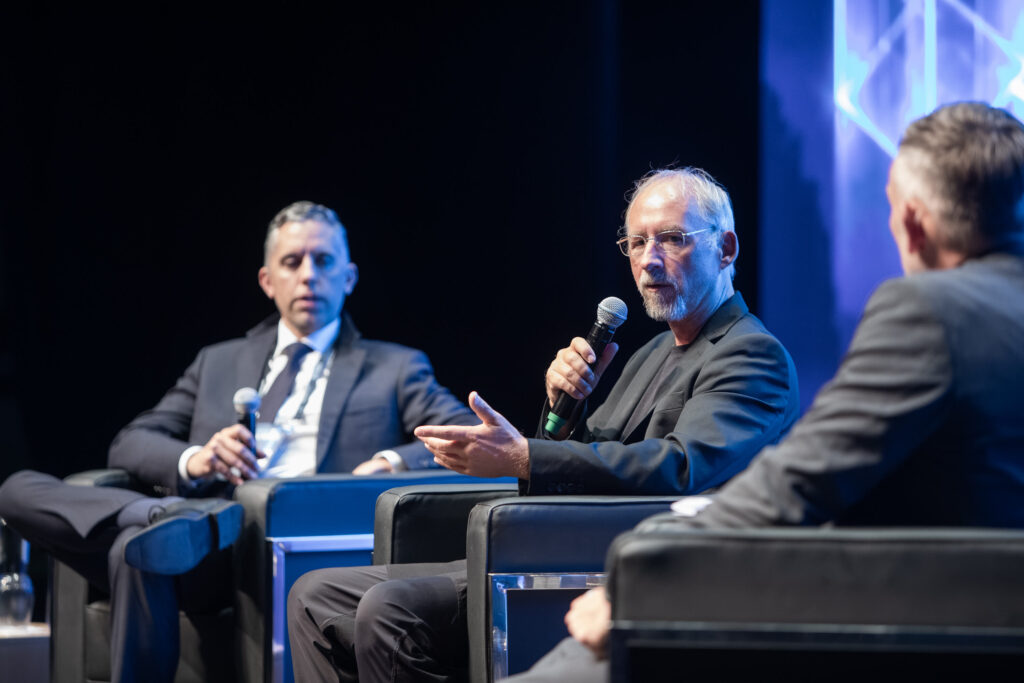
Adam Back discusses tokenised fixed income and collateral.
Rafael Mastroberardino of Franklin Templeton provided a live example, highlighting the hedge funds and market makers currently using interests in its Franklin OnChain U.S. Government Money Fund, available through the Benji platform, as collateral for trading positions. The assets can remain with a custodian and continue earning money-market yield rather than being transferred to an exchange as non-yielding margin.
Blockstream co-founder and CEO Dr. Adam Back explained why that model could be particularly valuable in derivatives markets. Bitcoin traders may have little interest in money-market funds as standalone investments, he observed, but they already commit substantial collateral to perpetual-futures venues. Yield-bearing instruments could therefore lower the cost of maintaining those positions.
As Lawrence put it, “Finance is about financing.” A token’s value increasingly depends on what its holder can do with it next.
New financial structures developing around bitcoin
Beyond tokenisation, The Future of Capital Markets also examined how bitcoin treasury companies, income-producing securities and collateralised lending are creating new routes to institutional participation.

Tokenisation Around the World panel.
Issuing equity at a premium to net asset value to buy bitcoin becomes less effective when that premium narrows or disappears. That has encouraged treasury companies to explore buybacks, acquisitions and preferred shares.
Strive CEO Matt Cole said the notional amount outstanding of the company’s SATA preferred shares had grown from $200 million at launch to more than $1.4 billion in under a year. Discussing institutional demand for Strive’s preferred securities more broadly, Cole said investors showed little interest in potential bitcoin upside: “They just wanted the yield.”
Sean Bill, co-founder and former chief strategy officer of BSTR, recalled that one public pension took two years to progress from its introduction to bitcoin to a small investment. In a separate panel, Bill said one idea discussed with pension funds was to invest in digital credit and use the income generated to build bitcoin exposure gradually, an approach that, he said, received “a pretty warm reception”.
Bitcoin-backed lending presents a different opportunity, but one still shaped by the past failures of companies such as Celsius, BlockFi and other crypto lenders in 2022. Speakers identified maturity mismatches, undisclosed rehypothecation and undercollateralised lending as central weaknesses in the previous cycle.
Newer models emphasise segregated collateral, transparent terms and restrictions on rehypothecation. Securitisation could eventually allow pensions and insurers to finance diversified pools of bitcoin-backed loans without originating individual loans. Institutional adoption will depend on how those safeguards perform under stress.
What comes next
Discussions at The Future of Capital Markets pointed to an industry increasingly focused on practical outcomes, namely better distribution, greater investor access and control, yield-bearing collateral and bitcoin financing structures suited to a wider range of mandates.
Turning these opportunities into wider adoption will require genuine demand and useful secondary markets for tokenised funds. Collateral must remain legally enforceable and accessible when needed. bitcoin-based financing structures must meanwhile demonstrate that their economics are sustainable.
Lawrence’s estimate shows how early the market remains. Progress will ultimately be measured not simply by the value of assets brought on-chain, but by whether those assets can move beyond their original point of issuance and be put to productive use.
For Bitfinex Securities and the wider industry, the ultimate opportunity lies in making capital more accessible, transferable and useful to the investors who hold it.
Explore the tokenised securities available through Bitfinex Securities.
The post appeared first on Bitfinex blog.