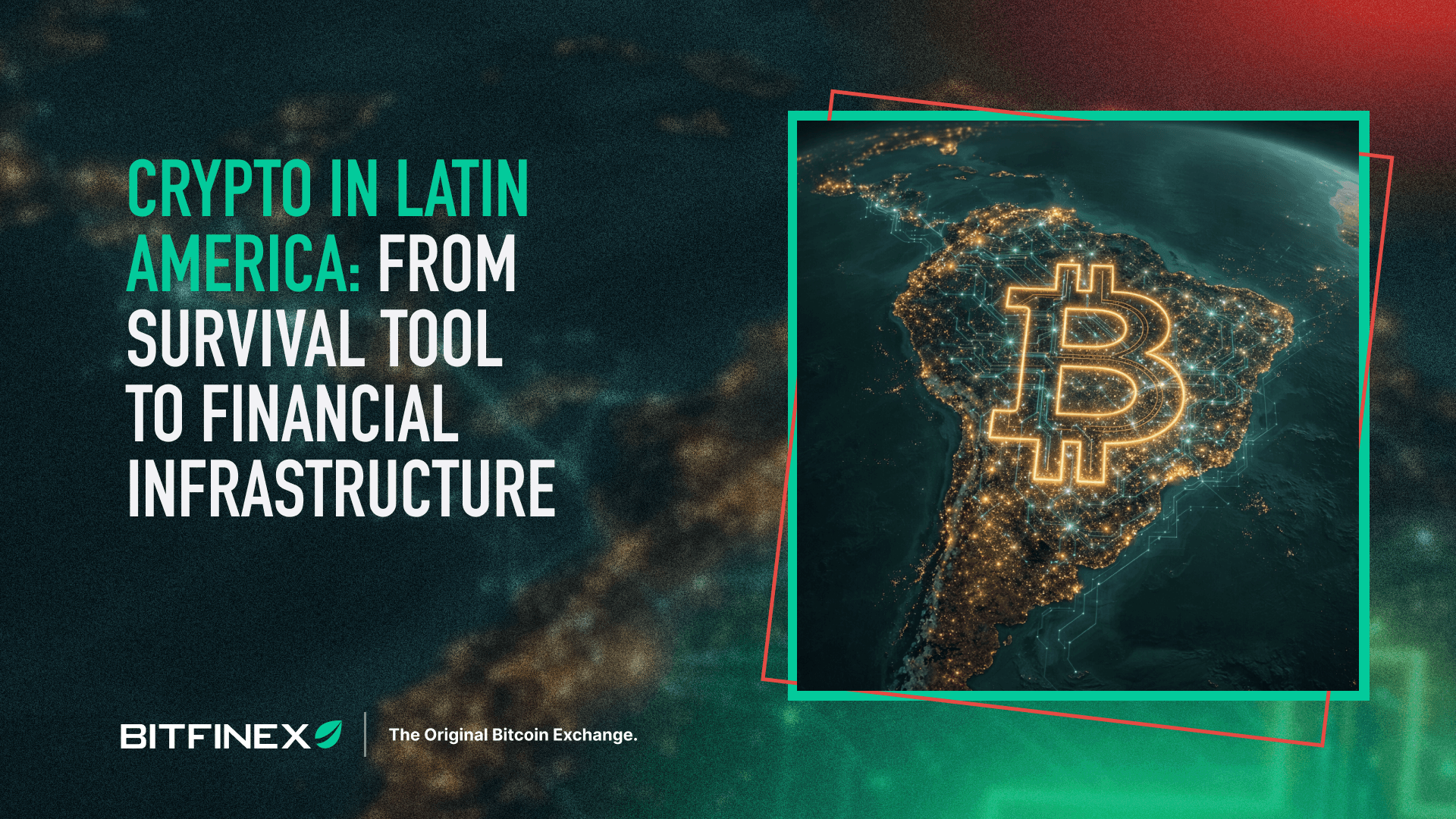
Latin America’s crypto market is no longer defined only by crisis. Inflation, capital controls and expensive cross-border payments still shape demand, but they no longer tell the whole story. What is emerging across the region is something altogether more durable.
Data released in February 2026 by Argentine fintech Lemon suggests that monthly active crypto users in Latin America grew three times faster than in the United States in 2025. According to Lemon’s Crypto Report 2025, the region recorded more than $730 billion in crypto transaction volume last year — up 60% year on year and equal to roughly 10% of global activity.
At first glance, the dominance of stablecoins such as USDt might look less like enthusiasm for crypto itself and more like demand for digital dollars. In reality, it points to something arguably more important and enduring: a market embracing crypto’s underlying technology less for speculation than for practical utility — to move money, settle payments and navigate the frictions of inadequate financial infrastructure.
In a region long hampered by expensive cross-border transfers, inflation that erodes savings and widespread financial exclusion, that utility is immediately powerful. More importantly, the infrastructure now emerging around these use cases — from seamless payment integrations and regulated on-ramps to institutional custody and tokenised assets — points to adoption that is maturing from makeshift workaround into durable financial rails.
From Workaround to Infrastructure
When Bitfinex last wrote about crypto adoption in Latin America, it was June 2023 and the region’s crypto story was still largely one of necessity. In countries such as Argentina and Venezuela, inflation and currency weakness pushed users toward Bitcoin and digital dollars as a way to preserve purchasing power. Across the region, expensive remittance channels, patchy banking access and widespread financial exclusion made crypto valuable mainly as a workaround where traditional systems fell short.
Those pressures haven’t disappeared. Cross-border transfers remain costly, inflation still distorts savings behaviour in certain countries and access to formal financial services remains uneven. Similar frictions also extend beyond payments. In capital markets, for example, Bitfinex Securities’ 2025 Latin America Market Inclusion Report identified a problem it called “liquidity latency”: high fees, shallow market depth and bureaucratic hurdles that slow the flow of capital and make fundraising and investment less efficient.
What has changed is the market being built around those constraints. What began primarily as an individual response to monetary stress and payment friction is increasingly being integrated into payment flows, regulated access points and, in some jurisdictions, institutional products.
The shift is subtle but important: crypto in Latin America is no longer only filling gaps left by weak infrastructure. It is increasingly becoming part of the infrastructure itself.
Stablecoins Are Becoming Latin America’s Financial Rails
Across Latin America, dollar-pegged tokens now account for a large share of crypto activity, functioning less like niche trading instruments than as parallel financial rails for payments, settlement and savings. According to Chainalysis, stablecoin purchases now account for more than half of all exchange activity involving the Argentine peso, Brazilian real and Colombian peso.
Brazil is the clearest example of where that trend leads. The country accounted for $318.8 billion in crypto transaction volume in 2025, nearly one-third of the regional total, with central bank officials indicating that around 90% of local crypto flows are stablecoin-related. Stablecoins are no longer confined only to exchange activity but increasingly embedded in how users move money day to day.
That shift is most visible in the growing integration between crypto wallets and Brazil’s Pix instant payment system. Pix already operates at national scale, and an increasing number of fintech services now allow users to spend USDt or USDC at Pix-enabled merchants. Bitfinex’s SWAPX integration with SmartPay reflects the same demand for simpler BRL-to-USDt on-ramps.
That infrastructure is also beginning to work across borders. Several Argentine fintech apps have connected stablecoin rails to Pix, allowing users to pay Brazilian merchants in pesos while USDt settles the transaction in the background. That’s an important distinction because it makes crypto infrastructure useful without even requiring users to think of themselves as crypto users.
Argentina remains particularly revealing. Even with inflation falling sharply and the Milei government easing capital controls over the past year, stablecoin use appears to have remained deeply embedded in everyday financial behaviour. What began as a crisis response has become useful for a broader range of functions, including cross-border payments, receiving funds from abroad and routine settlement in an economy where trust in the local currency remains fragile.
Brazil as the Institutional Anchor
Brazil’s importance in the regional story goes far beyond raw transaction volume. More than any other Latin American market, it shows what happens when crypto activity becomes too large and too embedded in financial behaviour to remain purely informal.
In November 2025, Brazil’s central bank published a raft of resolutions creating the country’s first formal authorisation framework for virtual asset service providers, effective from February 2026. Resolution 521 classified stablecoin transactions as foreign exchange operations, bringing dollar-pegged tokens within a clearer supervisory perimeter.
These measures do not explain Brazil’s crypto growth so much as recognise that a market of this size can no longer be treated as peripheral.
Private institutions are moving in the same direction. In June 2025, Brazilian fintech Méliuz became the country’s first publicly listed company to adopt a Bitcoin treasury strategy, while Itaú Unibanco, Brazil’s largest bank, has expanded its digital asset services. Together, those developments suggest that institutions are beginning to build around rails that users have already validated.
That does not mean the region is moving in lockstep. Brazil is the clearest institutional case by some distance. Elsewhere, the shift is still more visible in payments integration and regulatory experimentation than in fully developed market infrastructure. Even so, Brazil may offer the clearest indication yet of where the region is heading, showing that once crypto becomes useful enough at scale, formal finance is eventually forced to adapt around it.
El Salvador and the Next Frontier
If Brazil represents the institutionalisation of crypto payments, El Salvador has become a test case for what may come after stablecoins: tokenised capital markets operating on Bitcoin-native rails.
El Salvador’s Digital Assets Issuance Law, passed in 2023, created one of the first regulated frameworks for tokenised securities anywhere in the world. Bitfinex Securities has used that framework to bring tokenised Treasury exposure and other digital securities to market, with settlement in USDt on the Liquid Network. The platform is growing fast — with around $250 million in tokenised assets by late 2025 — and provides a good insight into how the regulation in El Salvador is providing a launchpad for new businesses to grow and prosper.
That matters in a region where traditional capital raises remain expensive and slow. For issuances in the $30 million to $50 million range, average fees can reach 7%. Tokenisation offers a plausible route to lower issuance costs, shorter listing timelines and broader investor access. If that infrastructure continues to prove viable, it could help address the same “liquidity latency” problem identified as one of Latin America’s deepest structural barriers — and, over time, offer a model for other markets in the region.
Stablecoins Are the Bridge, Not the Endpoint
Stablecoins dominate Latin American crypto volumes today because they solve immediate problems in economies where those problems are acute. But the infrastructure being built to support stablecoin use does not only serve stablecoins. Wallets, payment integrations, regulated access points and institutional custody are familiarising millions of users — and a growing number of institutions — with the open rails that all digital assets move across.
Products such as Aqua Wallet, which allows users to spend in USDt and save in Bitcoin within a single self-custodial app on the Liquid Network, point to where this is likely to lead.
Once users are comfortable holding digital dollars in a crypto wallet, other use cases become easier to understand and adopt. Bitcoin as a long-term store of value and tokenised securities as a route to capital formation begin to feel less like separate categories and more like extensions of the same financial stack.
For now, stablecoins are the entry point. In Latin America, they are becoming the early building blocks of a more open financial infrastructure — one that the region is assembling faster than many developed markets precisely because the need for it is more urgent.
The post appeared first on Bitfinex blog.