There has been considerable discussion about whether Authorised Participants (APs) in the Bitcoin ETF market, such as Jane Street, one of the world’s top liquidity providers and market makers, can suppress the BTC price, for its own advantage.
In our view, this is not the case. Indeed, APs, such as Jane Street, and other major banks which have AP status in the market, are simply taking an opportunity that has been made available due to the construction of the BTC ETF market. In particular, rules which allow APs to act in ways that can inadvertently keep the BTC price from rising as fast as it might otherwise.
APs are large market participants that are granted the authority to “create” or “destroy” ETF shares, to help keep the price stable.
In most cases, if a trader wishes to “short sell” an asset, they have to borrow it first and follow strict rules around collateral and custody. This comes with costs.
But APs are permitted to short sell ETF shares without borrowing them right away. This creates a “grey area” or “window” where they can take a short position on the price at low or near-zero cost. They are allowed to do this under an exemption to the Regulation Short (Reg SHO) they benefit from as an AP. Reg SHO is a set of Securities and Exchange Commission rules to regulate short selling.
They are allowed to do this to help the ETF run smoothly, but for BTC ETFs, it lets APs delay the actual buying of the ETF
This activity transmits through to the BTC price because where there is a demand for more ETF shares (if BTC’s price is rising), an AP might short sell the ETF shares first, but cover their position by using futures contracts, generally that are long BTC, in order to protect the short position. However under the Reg SHO exemption they do not need to borrow any shares and incur costs l. This allows them to costs. It also means that though the position is covered, the effect is the real BTC has not been acquired in the spot market for a period of time, even though real ETF buy orders have been placed.
Market Impact
The result is that the ETF grows, but the actual BTC price doesn’t rise because there has been no buying in the spot market. This can make the BTC price feel “stuck” or suppressed.
This setup also creates a gap between the ETF price and the real BTC price.
Generally, this does not have a significant market impact, but in periods of severe market dislocation, the gap between ETF demand and real BTC spot buying, or vice-verse, can create a short period of market mispricing.
BTC ETFs Are Built Differently
For non-BTC ETFs, APs usually swap assets immediately to cover positions, which is directly reflected in the underlying market. BTC ETFs were constructed differently, given the historical volatility of the asset, and US regulators mandated that they could be “cash-only” for creating/redeeming ETF shares, rather than “in-kind” (providing actual BTC to satisfy creation/redemption orders).
The cash-only rule, plus the short-selling pass, allows APs to delay acquiring or selling actual BTC, more easily than with other types of ETFs.
Why Do APs Participate In This Activity?
Prima facie, if APs are going long and short on the same asset, they are likely to yield zero profit. However, in this case the APs can exploit market imperfections. While the ETF shares track BTC’s spot price, the futures market reflects BTC’s price at a future date and those two can (and often do) differ slightly due to the “basis” on the future (the gap between spot and futures prices) and “funding rates” (small periodic payments exchanged between futures holders to keep prices aligned with spot).
APs pursue this strategy because it allows them to capture the basis with no significant risk. In crypto future markets, the asset often trades at a premium (called a contango). APs can short the ETF (effectively shorting spot-like exposure) and go long on futures to hedge, creating a “market-neutral” position. However, they profit when the basis narrows (futures price converges to spot) or widens in their favour. This is like arbitrage: squeezing small, reliable gains from pricing quirks without betting on direction.
Earning From Funding Rates
In perpetual futures, there is also a funding rate system. If futures are above spot, traders with long positions pay shorts a tiny fee every few hours; if futures are priced below the spot price, it’s the reverse. Depending on market conditions (bullish contango or bearish backwardation), APs can position their hedge to collect these payments. For example, if conditions favour longs receiving funding, their long futures side earns passive income while the cost-free short (thanks to the Reg SHO loophole) has no borrow fees eating into it. Over time, this adds up to real returns, especially with BTC’s volatility amplifying the opportunities.
Delaying spot buys adds flexibility: As discussed, the exemption that allows APs to short ETF shares without upfront costs or strict deadlines, means they can hold hedged positions open longer than the rest of the market. APs only close the trade (via creation/redemption of ETF shares) when it’s optimal, perhaps during in-kind redemptions (now allowed as of 2025), where they swap for actual BTC without immediate market impact. This turns it into a low-cost way to play volatility or wait out dislocations, all while facilitating ETF liquidity.In short, this activity is not about taking a directional view (up/down), it is more about exploiting inefficiencies between related but not identical markets for steady, low-risk profits. The loophole makes it uniquely cheap and scalable for APs to earn additional profits.
Non-APs cannot easily replicate this activity due to borrow costs and deadlines.
Why Do APs Short ETF Shares When Demand Rises?
APs do not have to short ETF shares, when there are creation requests, however they choose to do so as it represents an efficient way to handle high demand quickly, provide liquidity to the market, while enabling them to arbitrage the spot and the futures markets.
This Reg SHO exemption makes it possible by letting APs short, without the usual costs or hurdles that non-APs face.
What Happens When Demand for ETF Shares Increases?
When buyers want more ETF shares, they bid up the price on the market, moving the price temporarily higher than its “true” value, called the Net Asset Value (NAV).
NAV is basically the value of the underlying Bitcoin the ETF holds, divided by the number of shares.
Example: If the NAV is $100 per share but demand pushes the market price to $101, that’s a “premium” of $1. This mismatch is an opportunity for APs to step in and fix it, by meeting the price back in line
To do this an AP can either buy the underlying asset (BTC), or in the case of BTC ETFs, just provide cash.
They then deliver it to the ETF issuer in exchange for new ETF shares. They can then sell those new shares on the market at the premium price.
The APs make profit, because they create ETF shares at NAV ($100) and sell at market ($101), pocketing the $1 difference (minus costs).
The problem for the Bitcoin price is that it takes several hours, and sometimes not until the end of the day to complete the creation.
In a fast moving market, buyers want shares now, not later. Waiting could mean missing the premium or letting the price gap grow, which hurts liquidity (easy buying/selling).
Why Short First?
APs skip the wait by using a shortcut: Short sell the ETF shares immediately.
Short selling means selling shares you don’t own yet, betting you’ll buy or get them later to “cover” (deliver to the buyer).
Normally, short sellers must “locate” (find and borrow) shares first, which costs money (borrow fees) and adds delays. If you short without locating, it’s illegal “naked shorting.”
But Reg SHO allows for an exemption, just for APs, allowing them to short ETF shares without locating or borrowing if it’s tied to creating new shares later. This is called “short exempt” or “operational shorting.” It’s legal because APs are trusted to follow through with creation, and is part of the facilitation of the ETF.
The typical manner in which it plays out is that when demand spikes, the ETF trades at a premium to NAV ($101 vs. $100 NAV).
The AP shorts by selling the ETF immediately at $101 to eager buyers, providing instant supply (liquidity). Now the AP is “short” (owes those shares).
To hedge, the AP might buy BTC futures instead of spot BTC immediately. This delays the spot buy.
Later (often same day or next), the AP creates new shares, and delivers cash or BTC to the issuer, and receives the real ETF shares. The AP then uses those new shares to cover the short (deliver to the buyers).
The result is that the AP supplied shares fast, closed the premium gap (ETF price drops back toward NAV), and profited from the $1 spread all with low risk and no upfront borrow costs.
What are the Benefits?
APs chose this approach because of the speed and liquidity it provides to the rest of the market. Given the fast-moving nature of markets, shorting allows APs to flood the market with shares instantly, keeping trading smooth.
Without doing so, buyers might face delays or higher prices.
APs capture the premium arbitrage safely, and the short is just temporary (just a bridge to creation), and the Reg SHO exemption makes it cost-free. Combined with futures hedging, APs can further earn from basis trades or funding rates without betting on BTC’s direction.
APs also handle huge volumes. Shorting lets them sell any amount needed, then batch creations efficiently (e.g., wait for a full creation unit of say, 50,000 shares).
Regulators designed the exemption to help ETFs work better, and APs use this routinely.
In BTC ETFs, the cash-only creation (until in-kind recently) makes delaying spot buys even easier.
APs don’t have to be short, and could just proceed with straightforward creation. In practice however, shorting is common because skipping it means slower response and missed profits.
The risk is if the market flips (e.g., premium turns to discount), and the hedge disappears. But the exemption limits this by tying it to creation.
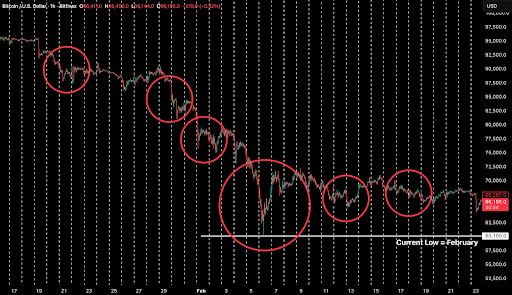
In BTC specifically, this activity can have the impact of “suppressing” spot prices by delaying buys, but this is just a side effect, not the goal. APs do it for efficiency.
In summary, shorting first is like lending shares you don’t have yet (but will soon create). It keeps the ETF running smoothly and lets APs profit from fixing price gaps. Without the Reg SHO exemption, this wouldn’t be as easy or cheap.
BTC ETFs were initially “Cash-Only” because the SEC required spot BTC ETFs, first approved in January 2024, to use a “cash-only” model for creations and redemptions of shares.
This meant that APs that had to create or redeem ETF shares had to use cash instead of directly swapping actual BTC (known as “in-kind” transactions).
The SEC took the view that because of BTCs unique characteristics as a fully digital asset, traded on global and often unregulated exchanges, it was sometimes highly volatile. Unlike traditional ETFs (e.g., for stocks or gold), where in-kind swaps are standard and efficient, the SEC wanted to minimize risks in the crypto space.
Key reasons included custody and regulatory risks, where many APs, like banks or market makers, weren’t necessarily set up or registered as broker-dealers to safely hold (custody) Bitcoin themselves.
Allowing in-kind swaps could mean these firms directly handling crypto, were exposed to the risk of improper storage of an asset prone to hacks and lacking uniform oversight. The SEC aimed to keep Bitcoin transactions centralised with the ETF issuers (like BlackRock or Fidelity), who have approved custodians, rather than letting APs touch the crypto directly.
BTC trades 24/7 on fragmented, international platforms that aren’t as tightly regulated as US stock exchanges. In-kind creations could potentially open doors to manipulation, such as using BTC from unverified sources or exploiting price differences across markets. Cash-only creations kept things simpler: The ETF issuer buys or sells BTC on the open market using cash from APs, making it easier for regulators to monitor and apply anti-money laundering (AML) rules.
Operational Simplicity and Investor Protection: Cash transactions avoid the complexities of transferring digital assets, which could be messy due to BTC’s volatility (e.g., prices swinging wildly during the transfer window). This model also aimed to protect investors by ensuring the ETF’s price tracks BTC closely without added risks from crypto handling. However, it came with downsides like higher transaction costs and potential tax inefficiencies, as the issuer has to buy/sell BTC each time, which could widen bid-ask spreads or trigger capital gains.
In essence, the SEC was being extra cautious with a new, high-risk asset like BTC, prioritising safety over efficiency to prevent issues seen in past crypto scandals (e.g., the FTX collapse).
What Changed? (Update as of 2026)
This cash-only requirement wasn’t permanent. In July 2025, the SEC approved in-kind creations and redemptions for crypto ETFs, including those holding Bitcoin and Ether, bringing them in line with other commodity-based ETFs. This shift followed new SEC guidance allowing broker-dealers to custody crypto assets more easily, addressing the earlier concerns.
By mid-2025, major ETFs like BlackRock’s iShares Bitcoin Trust (IBIT) and others updated their filings to enable in-kind swaps, improving cost savings, tax efficiency, and liquidity for investors. As of February 2026, in-kind is now widely used, with recent examples like Hashdex’s ETF amending agreements to allow direct digital asset transfers.
The post appeared first on Bitfinex blog.